United States
State laws and curriculum requirements
States are adopting laws and curriculum requirements covering areas such as digital literacy, media literacy, online safety, cybersecurity, social media, and responsible technology use.
 Request Information
MASK NextGen prepares students to navigate AI, social media, cybersecurity, digital identity, and online risk with greater confidence and judgment.
Founded by Avni Trivedi, MASK NextGen develops digital safety and AI readiness programs for K–12 and higher education.
K–12 students are growing up in a digital environment shaped by social media, AI, online identity, cybersecurity threats, misinformation, and constant access to technology.
They are often told what can go wrong. But knowing that a risk exists is different from knowing what to do when it happens.
MASK NextGen gives students opportunities to work through realistic situations, make decisions, see consequences, and apply what they learn as those situations become more complex.
By college, the challenge changes. Students are preparing to enter workplaces where AI use, digital judgment, information security, and professional identity are becoming part of everyday work across many fields, not just technology.
MASK NextGen's Higher Education program connects that preparation directly to the workplace. Students learn to evaluate AI output, identify hallucination and bias, understand when AI use should be disclosed, protect their professional digital identity, recognize synthetic media, use prompts for real workplace tasks, and understand when human judgment needs to take over.
The goal is a continuous path: help students develop stronger digital decision-making skills early, then prepare them to carry those skills into college, work, and adult life.

To prepare students to navigate technology safely, use AI responsibly, and make better digital decisions
From their earliest online experiences through college and into the workplace. Digital safety and AI literacy can no longer be treated as separate subjects — students need to know how to protect an account and recognize a scam, and they also need to understand:
Knowing the answer is only part of the job. Students also need opportunities to apply what they learn to situations that resemble the ones they will encounter outside the classroom.
That principle runs through MASK NextGen from elementary school through college.
Digital safety and AI literacy are becoming requirements
The requirements differ by jurisdiction, but the direction is clear: digital safety and AI readiness are becoming part of what education systems are expected to teach. MASK NextGen was built for that shift.
States are adopting laws and curriculum requirements covering areas such as digital literacy, media literacy, online safety, cybersecurity, social media, and responsible technology use.
India is moving AI education directly into the school curriculum, including computational thinking, digital literacy, responsible technology use, and ethical AI.
The UAE has established a national K–12 AI literacy framework with expectations around responsible AI use, ethics, critical thinking, and preparation for higher education and careers.
Two stages, one continuous path
MASK NextGen serves students at two important stages of their education.
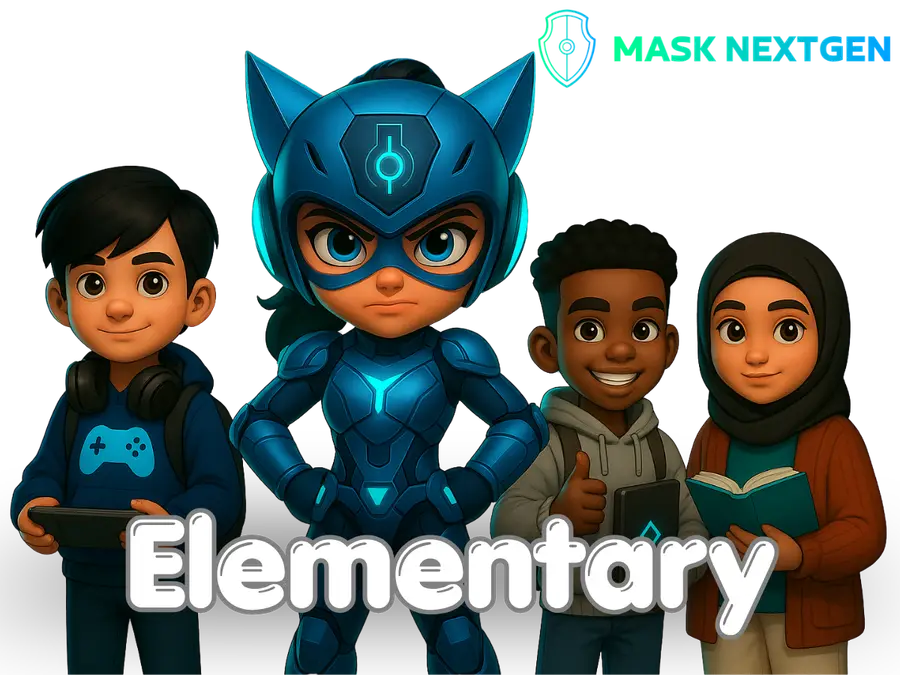
Digital safety, cybersecurity, digital citizenship, and age-appropriate AI concepts are introduced through situations students can recognize and respond to. The curriculum grows with students from elementary through high school, moving from recognizing unsafe situations to handling increasingly complex digital decisions independently.

The program prepares college students to use AI responsibly, evaluate its output, manage digital risk, protect their professional identity, and understand when human judgment needs to take over. The 24-week program combines applied learning, live specialist-led instruction, assessment, an AI Readiness Score, and a college-connected certificate.
Six areas students can return to
SHIELD gives students a common framework they can return to as the technology and situations around them change.
Recognize risk and know when to get help.
Develop healthier patterns around technology use.
Make responsible choices online and with AI.
Understand how digital actions affect other people.
Understand the systems, information, and technology students encounter.
Protect personal information, accounts, devices, and digital identity.
Designed to work inside real schools and colleges
Schools do not have to create their own digital-safety curriculum or ask teachers to become cybersecurity or AI experts. MASK NextGen provides the student experience, curriculum, activities, program structure, and reporting needed to support implementation.
The program is designed to reach students across majors, including those with no technical background. It connects AI readiness and digital safety to decisions students are likely to face as they move from college into the workforce.
Education, technology, cybersecurity, media, and the workforce
Together, the team brings different perspectives to the same challenge: preparing students to understand technology well enough to make sound decisions with it.
Avni founded MASK NextGen around a simple idea: students need more than warnings about technology. They need practical preparation for the decisions they will face as AI, social media, digital identity, and online risk become part of everyday life.
Stephanie leads digital safety and AI readiness curriculum development from elementary school through college. She holds engineering degrees from Florida A&M University and the University of Pennsylvania and has spent more than a decade translating complex technology topics for broad audiences. She is a technology contributor to Good Morning America, host of Life and Tech with TechLifeSteph on WURD Radio, an author, TEDx speaker, and longtime advocate for digital citizenship.
Her work at MASK NextGen focuses on turning complex technology topics into material students can understand and use.
John is a CISSP-credentialed Chief Information Security Officer and university instructor. His professional and classroom experience helps connect MASK NextGen's curriculum to the cybersecurity, AI, and digital-risk decisions students are likely to encounter beyond the classroom.

Practical guidance and resources to help families understand digital risk, AI, social media, and online behavior.
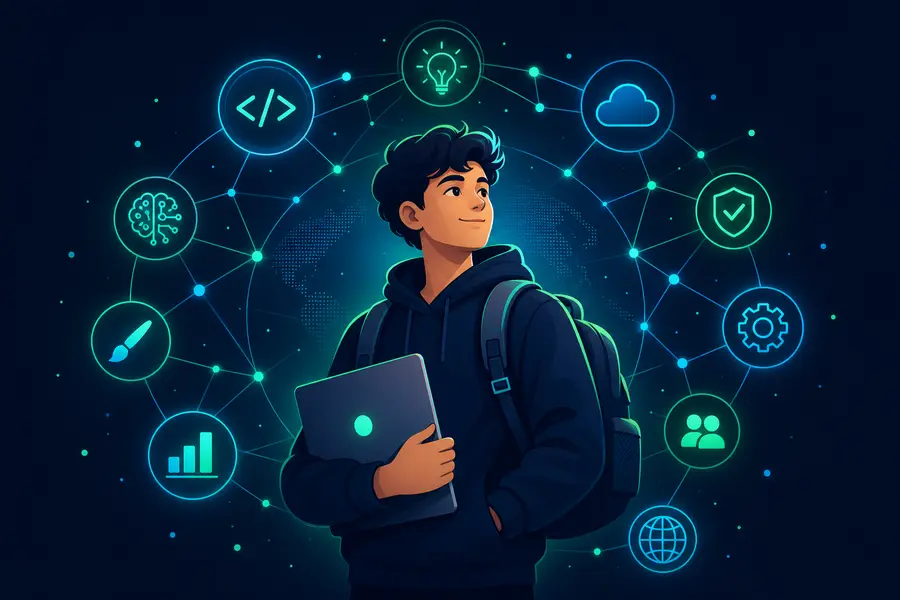
Age-appropriate learning that builds digital safety, AI readiness, and stronger decision-making from elementary school through college.
Curriculum, tools, and support designed to help schools teach digital safety and AI readiness without requiring teachers to become technology experts.
Company information, press coverage, interviews, and media resources.
Visit the Press Room